
Case study
Amazon Seller Inventory Management System
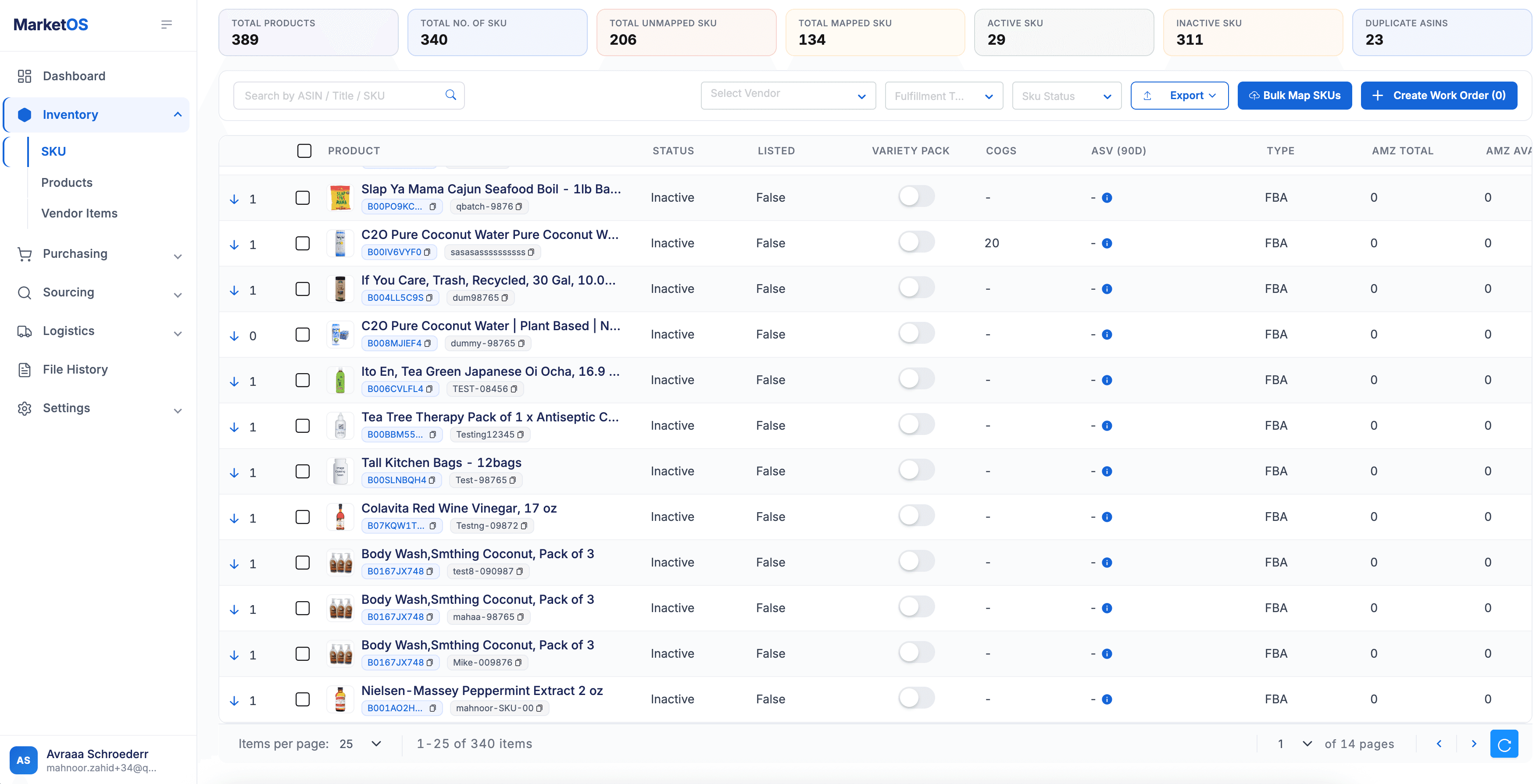
MarketOS is an enterprise fulfillment management platform for e-commerce businesses managing multi-channel inventory across Amazon and Walmart. Built with Node.js/Express and MySQL, it automates the entire fulfillment lifecycle—from vendor sourcing and purchase orders to warehouse operations and marketplace shipments. The system features sophisticated catalog management, real-time API integration, work order automation, multi-location inventory tracking, and role-based permissions, enabling high-volume sellers to scale operations efficiently.
Overview
Amazon Seller Inventory Management System
Scope, timeline, and context—how the work was framed before a single sprint shipped.
MarketOS is an enterprise-grade fulfillment management platform designed for e-commerce businesses operating across Amazon FBA and Walmart WFS marketplaces. The system automates the complete fulfillment lifecycle—from vendor sourcing and catalog management through warehouse operations to marketplace shipments.
Organization
Confidential
Duration
Ongoing
Project type
Web Application
Role
Full Stack Engineer
Case study
How we got there
From constraint to release: the problem, the approach, the build, and what changed after go-live.
The problem
A growing e-commerce company managing 10,000+ SKUs across Amazon and Walmart hit critical bottlenecks: manual catalog matching took 15-20 minutes per product, ASIN gating verification was inconsistent causing rejected shipments, inventory sync ran manually with 8-12 hour lag, and failed background jobs had no retry mechanism. A silent catalog upload failure caused $150K in lost revenue over 3 weeks.
The approach
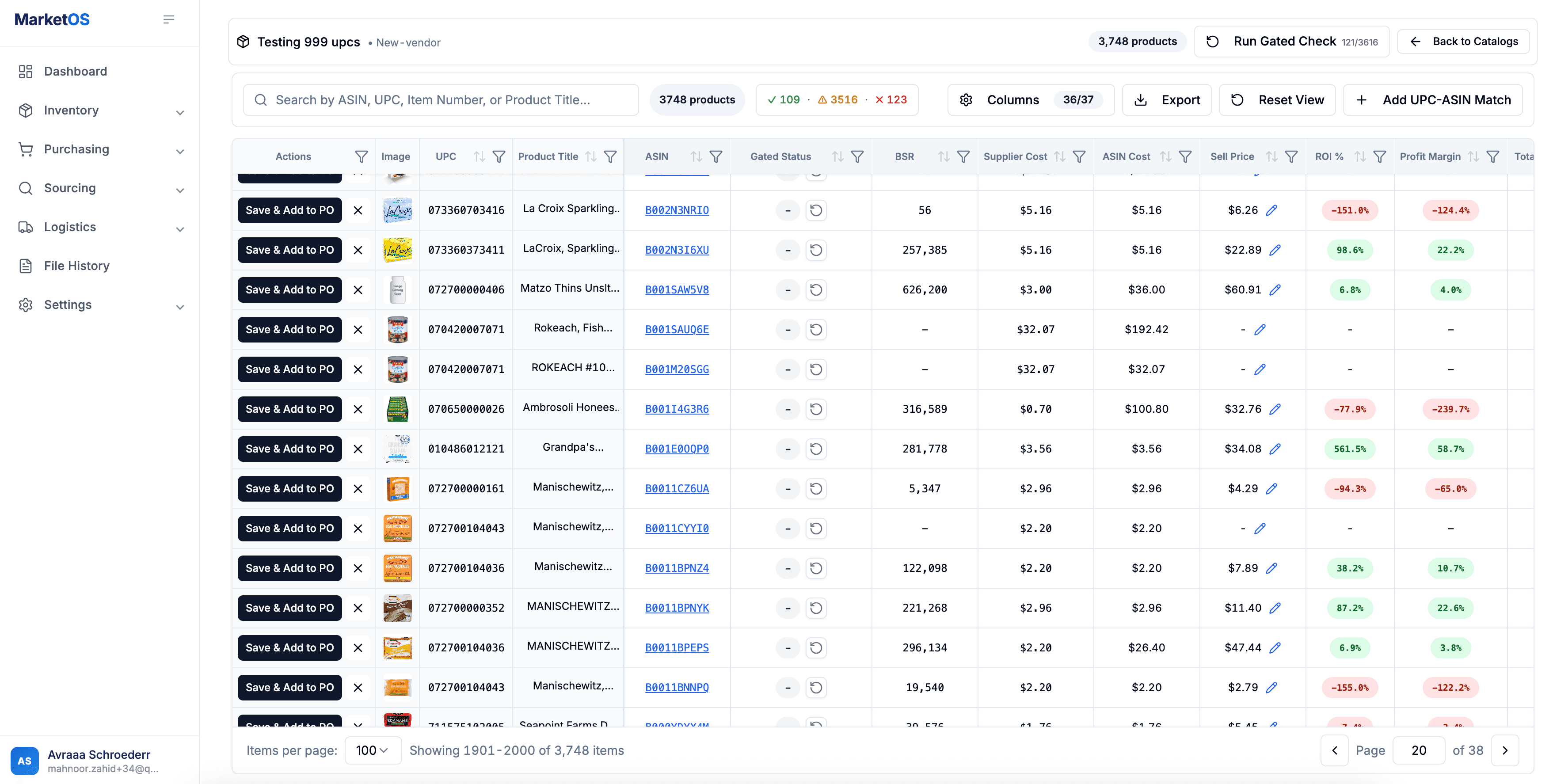
Build three core systems: (1) Intelligent Catalog Analyzer for automated UPC-to-ASIN matching with profitability calculations (2) Background Job Orchestration using Agenda.js with 3-tier priority queues and automatic retry logic (3) API-First Integration with throttling protection and error monitoring.
The solution
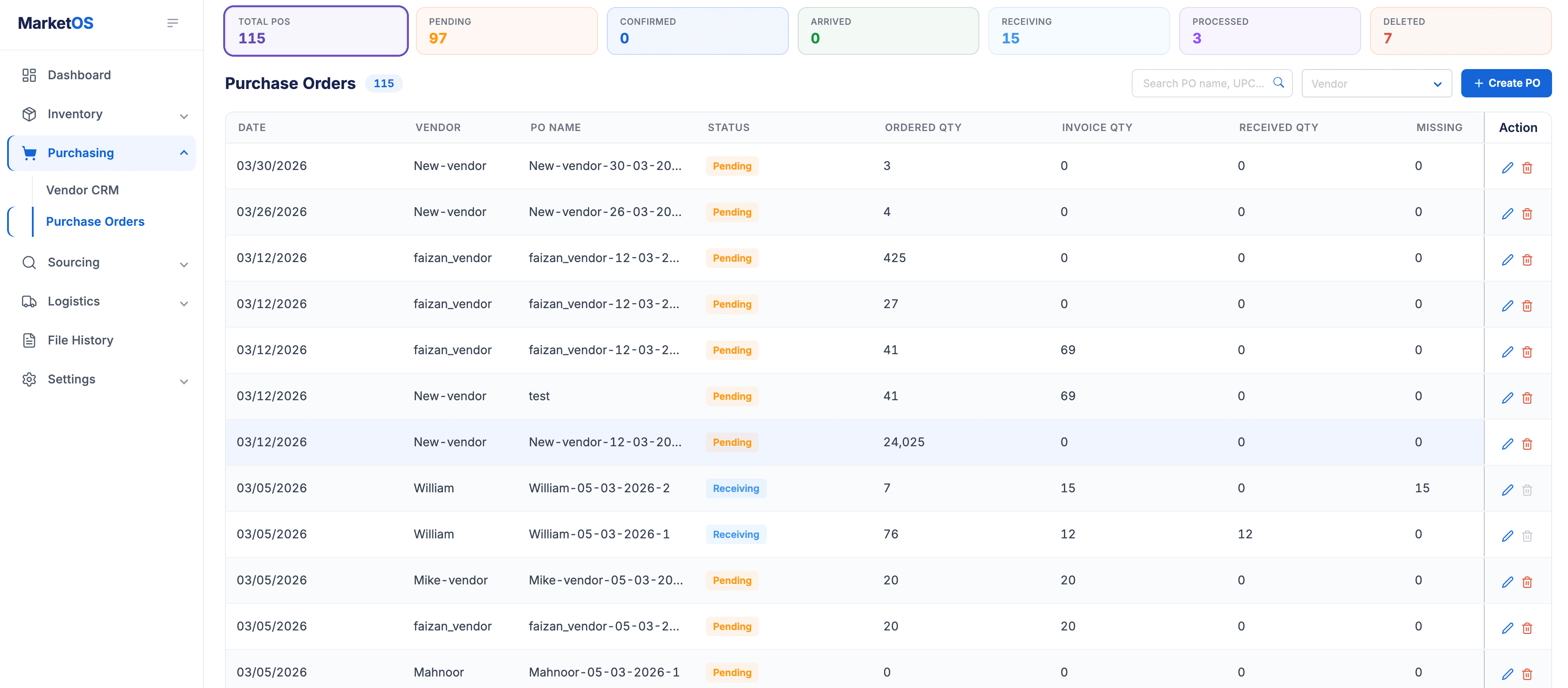
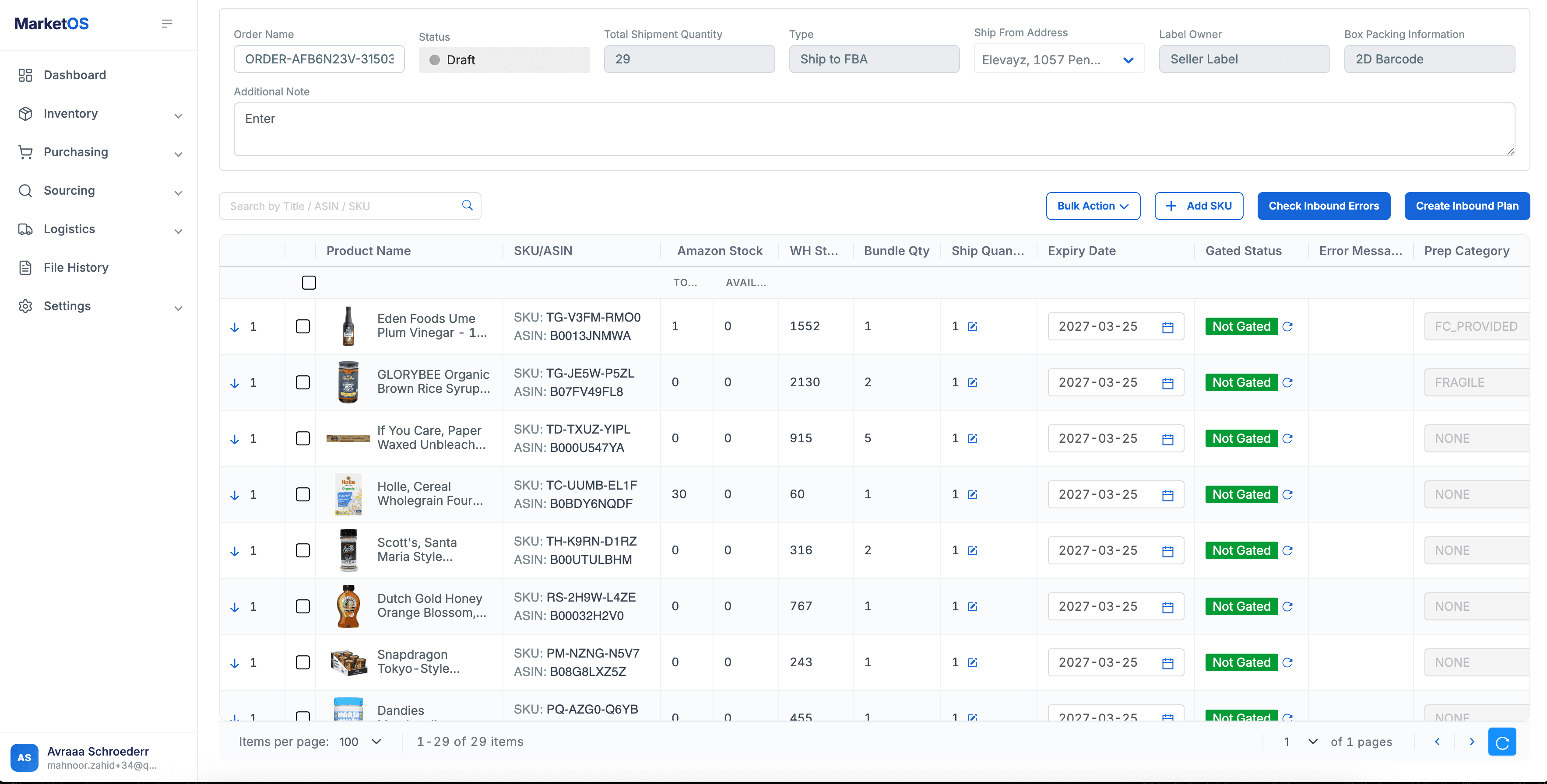
PO lifecycle management with receiving workflow Multi-location inventory with COGS tracking Work order system with item-level tracking Role-based permissions across 8 modules Catalog Analyzer: Automated UPC-to-ASIN matching via Amazon Product API Real-time profitability: ROI = (sell_price - (unit_cost × bundle_qty) - fees) / asin_cost × 100 Bulk ASIN gating verification with session management and 7-day caching Dynamic filtering with 20+ criteria (BSR, vendor, meltable status) Audit trail tracking all user actions Background Jobs System: 3-tier MongoDB queues (high/medium/low priority) User-specific job control (start/stop individual user's jobs) Job types: ASIN verification, bundle quantity updates, vendor sync, inventory sync Execution logging with completion times and error tracking Microservice architecture preventing main API blocking
Product views
Amazon Seller Inventory Management System
Interface moments that show hierarchy, density, and polish—the same bar we bring to stakeholder reviews.
Results
The result
Within six months of deployment, MarketOS transformed operational chaos into streamlined efficiency, delivering measurable impact across speed, cost, and scalability
95% reduction in catalog matching time (15 min → 45 sec) $200K annual savings from reduced stockouts $150K prevented loss from automated gating verification 99.9% job success rate with automatic retry Zero API throttling with intelligent rate limiting Now handles 25,000+ SKUs across 5 warehouses ROI in 4 months
Catalog Matching Speed
95% faster
Reduced from 15 minutes to 45 seconds per product
API Response Time
Sub-second
Background job offloading eliminated blocking requests
Export Processing Speed
10K+ rows in 30 seconds
ExcelJS streaming handles large datasets efficiently
Inventory Sync Latency
Real-time
Eliminated 8-12 hour manual sync lag
Annual Cost Savings
$200K
Reduced stockouts and overstocking through automation
Next step
Want a build like this?
We scope in milestones, ship in slices, and keep communication crisp—so your roadmap stays honest.