
Case study
Iris: High-Performance Social Platform for Scientists
A complete frontend rebuild and performance optimization of a scientist-focused social platform, improving speed, SEO, and overall user experience.

Overview
Iris: High-Performance Social Platform for Scientists
Scope, timeline, and context—how the work was framed before a single sprint shipped.
Iris is a full-scale social platform designed for scientists to connect, collaborate, and share research. The platform required a modern, high-performance frontend capable of handling complex data interactions while maintaining a smooth user experience.
Organization
Confidential
Duration
6 weeks
Project type
Web Application
Role
Frontend Engineer
Case study
How we got there
From constraint to release: the problem, the approach, the build, and what changed after go-live.
The problem
The existing platform struggled with performance and scalability issues that directly impacted usability. Pages were slow to load, interactions felt delayed, and the overall experience lacked responsiveness. A major contributing factor was the inefficiency of backend APIs, which were not optimized for frontend consumption. Additionally, the platform had weak SEO foundations, limiting its visibility, and the outdated user interface made it harder for users to navigate and engage effectively.
The approach
Rather than applying incremental fixes, the decision was made to rebuild the frontend from the ground up. The focus was on creating a clean and scalable architecture that could handle complex data flows more efficiently. Special attention was given to how data was fetched, processed, and rendered, ensuring that the frontend could compensate for backend limitations. At the same time, the structure of the application was rethought to improve SEO and overall accessibility.
The solution
A new frontend was developed using Next.js, enabling improved rendering strategies and better performance. The UI was redesigned with a modern approach to enhance clarity and usability across the platform. API integration was carefully optimized to handle inefficient endpoints more effectively, reducing delays and improving data consistency. The application structure was also refined to support better SEO practices, ensuring that content could be indexed and discovered more easily.
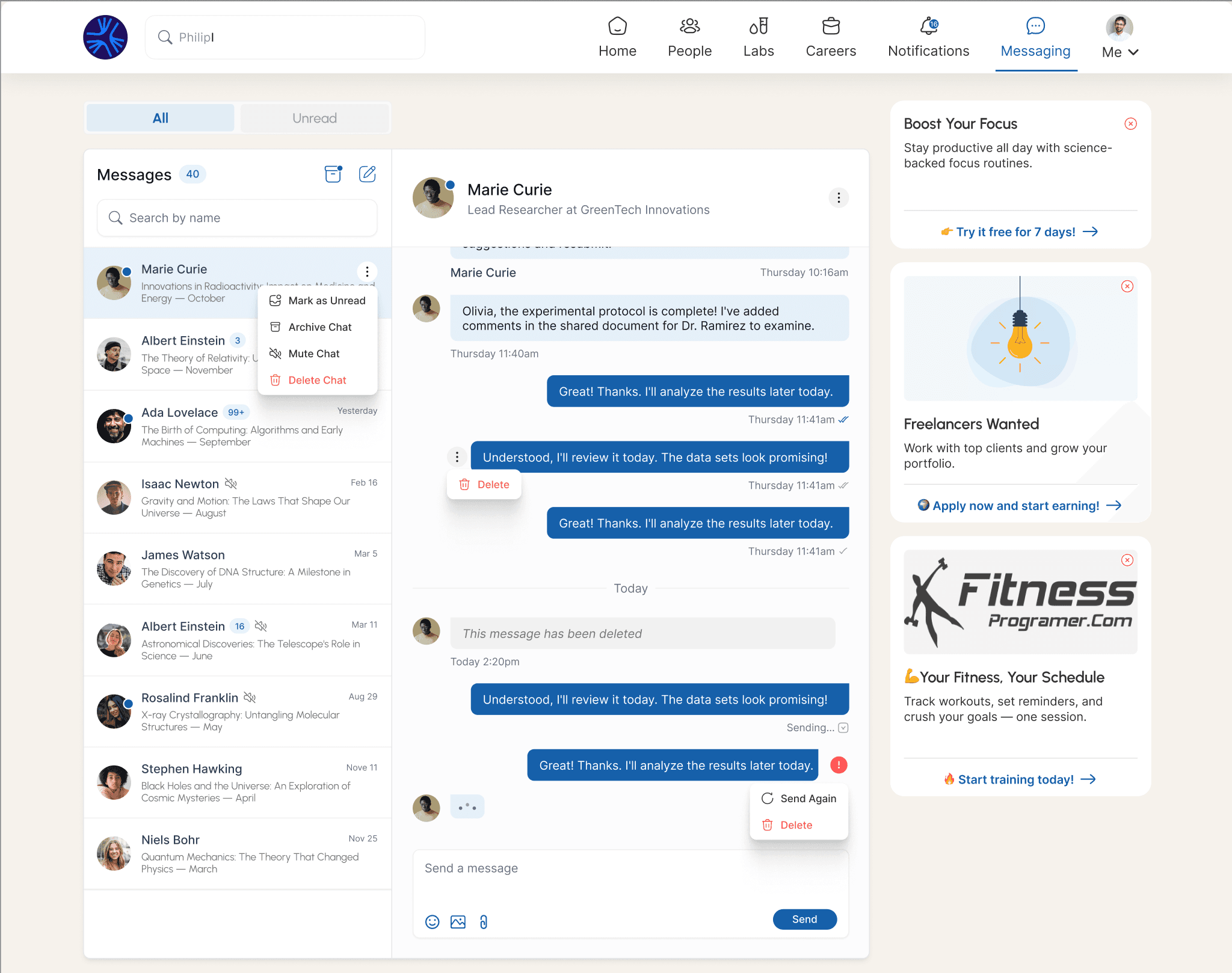
Product views
Iris: High-Performance Social Platform for Scientists
Interface moments that show hierarchy, density, and polish—the same bar we bring to stakeholder reviews.

Results
The result
High-impact performance and usability improvements delivered across the platform
The platform experienced a significant improvement in performance, with faster load times and smoother user interactions. The redesigned interface made navigation more intuitive, leading to a better overall user experience. Additionally, the improved structure contributed to stronger search engine visibility, while the new frontend architecture provided a more stable and scalable foundation for future development.
Performance Improvement
40%
Achieved faster load times and smoother interactions across key user flows
Lighthouse Score
52 → 89
Improved performance and SEO scores through better structure and optimization
API Efficiency
-35% API Calls
Reduced redundant requests and improved data fetching strategy
Time to Interactive
45% Faster
Improved responsiveness by optimizing component rendering and data flow
Next step
Want a build like this?
We scope in milestones, ship in slices, and keep communication crisp—so your roadmap stays honest.